

Epoxy vs. Polyaspartic Flooring: Which Floor System Is Right for Your Florida Garage?
Less a chemistry lesson, more a checklist for your specific project.
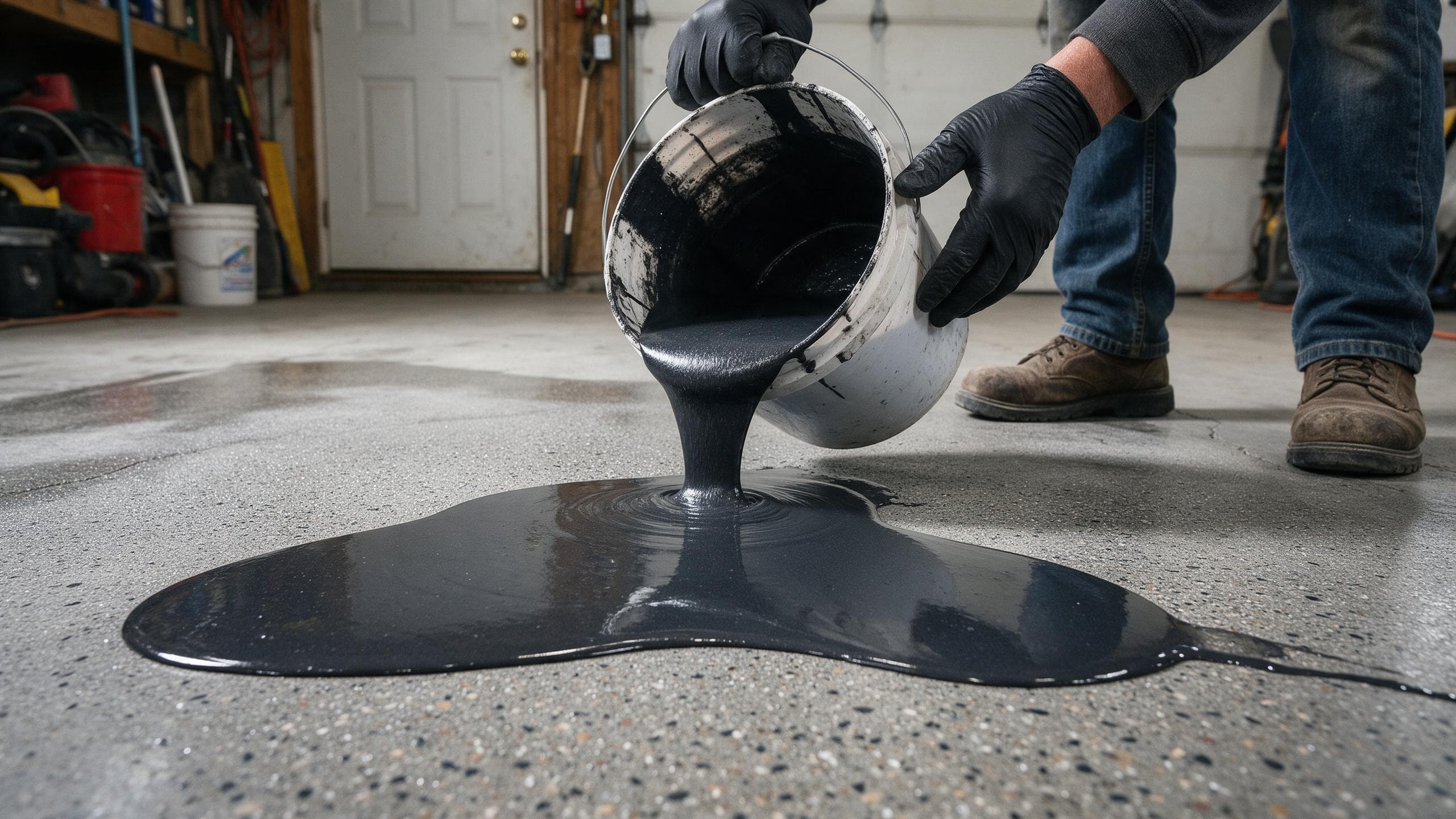
By Epoxy & Beyond · Buyer's Guide · September 21, 2026
Two systems, two different jobs to do
If you've already decided a bonded coating (rather than tile or a sealer) is the right category for your garage, the next real decision is epoxy or polyaspartic — or, often, both together as a base-and-topcoat system. We cover the broader marketing claims around these two (and polyurea) in a separate article; this one is meant to be used project-by-project, as a decision checklist rather than a myth-correction piece.
Appearance and finish options
Both systems support the same decorative range, solid color, flake broadcast, and metallic finishes, since the topcoat and decorative layer are what create the look, not the base resin alone. Epoxy's longer working time gives more room for detailed troweled or hand-applied metallic effects; polyaspartic's faster cure suits straightforward color and flake work well but leaves less time for elaborate hand technique.
Cure time and project timeline
Polyaspartic generally cures faster than standard epoxy, which is why it's associated with quicker overall project timelines. Epoxy typically needs more time between coats and before the floor is put back into use. If your household or business genuinely can't be without garage access for more than a day, this is one of the more concrete, project-specific factors to weigh, alongside how much decorative detail you want.
UV performance
Standard epoxy can amber or chalk under sustained direct sun. Polyaspartic topcoats are generally chosen for sun-exposed floors, garages with west-facing doors, exterior-adjacent spaces, because they tend to hold color better over time. This matters more for a garage that gets direct sun through the door for part of the day than one that stays fully closed and shaded.
Chemical and hot-tire resistance
Both systems, properly formulated and installed, resist common garage exposures, oil, coolant, hot-tire pickup from a car pulling in after highway driving, reasonably well. Specific product formulations vary more within each category than the category names suggest, which is part of why the base resin type isn't the only variable worth asking about.
Maintenance
Day-to-day maintenance is similar for both once installed: sweeping, occasional mopping, and avoiding harsh solvents on the surface. Neither requires meaningfully more upkeep than the other; the bigger maintenance factor is the decorative finish chosen (a full flake floor hides dirt differently than a solid color) rather than epoxy versus polyaspartic specifically.
Cost factors
Material and labor differences between the two systems are typically smaller than the differences driven by decorative finish, slab condition, and square footage, covered in our cost guide. A base-and-topcoat combination system involves more material than a single-system floor, which is a factor worth discussing at the quote stage rather than assuming either system is categorically cheaper.
Which one fits your project
- Tight timeline or limited days without garage access → polyaspartic, or a polyaspartic topcoat, tends to suit faster turnarounds.
- Heavy sun exposure through the garage door → a polyaspartic topcoat for UV stability.
- Elaborate hand-applied metallic work → epoxy's longer working time gives more room for technique.
- Straightforward solid color or flake floor with no rush → either system performs well; the choice comes down to your contractor's recommendation for your specific slab.