

Garage Makeover Guide: How to Turn an Ordinary Florida Garage Into a High-End Space
The floor is the foundation. It isn't the whole project.
By Epoxy & Beyond · Design & Inspiration · September 21, 2026
Quick answer
In what order should I plan a garage makeover?
Start a garage makeover with the slab and flooring, since that work involves the most disruption and dust. Then do the wall systems, then the cabinetry and storage that anchors to the floor or walls, then lighting and final organization. Getting the order right avoids redoing work or protecting finished surfaces from a later phase.
Related services: Garage Floor Coatings, Metallic Epoxy Flooring
Flooring is the foundation, not the whole project
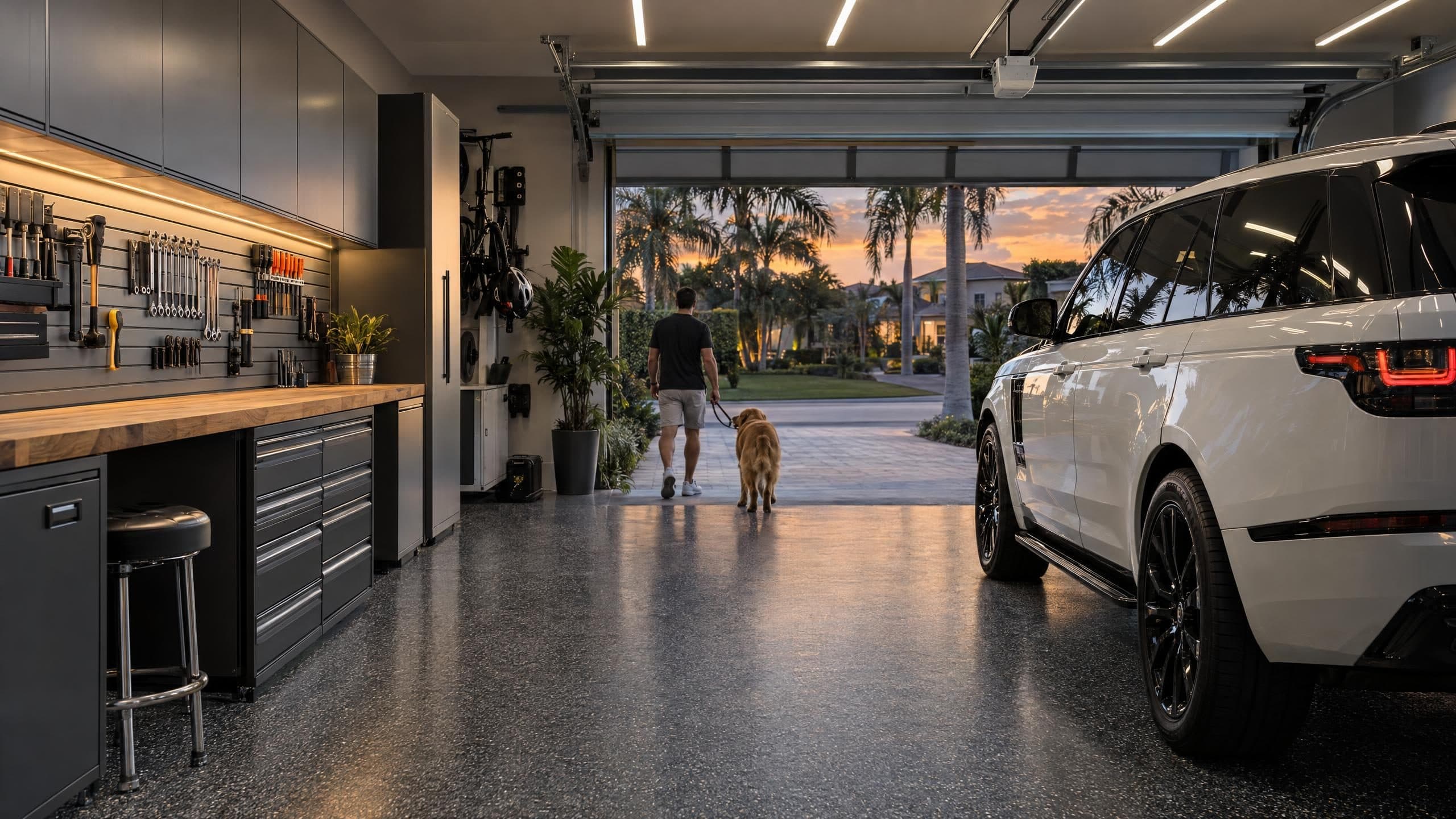
A coated floor is usually where a garage makeover starts, since it's the surface everything else sits on and the fastest way to change how the whole space feels. But a genuinely high-end garage is a combination of a handful of elements working together, not a floor coating on its own. This is a practical rundown of the pieces worth planning for, and how flooring fits into the sequence.
Storage and organization
Wall-mounted cabinetry, slatwall systems, and overhead storage move clutter off the floor, which does more for a garage's finished appearance than almost anything else. It's worth deciding on a storage layout before flooring goes in if cabinets will be anchored to the slab, since that sequencing avoids working around fixtures later.
Lighting
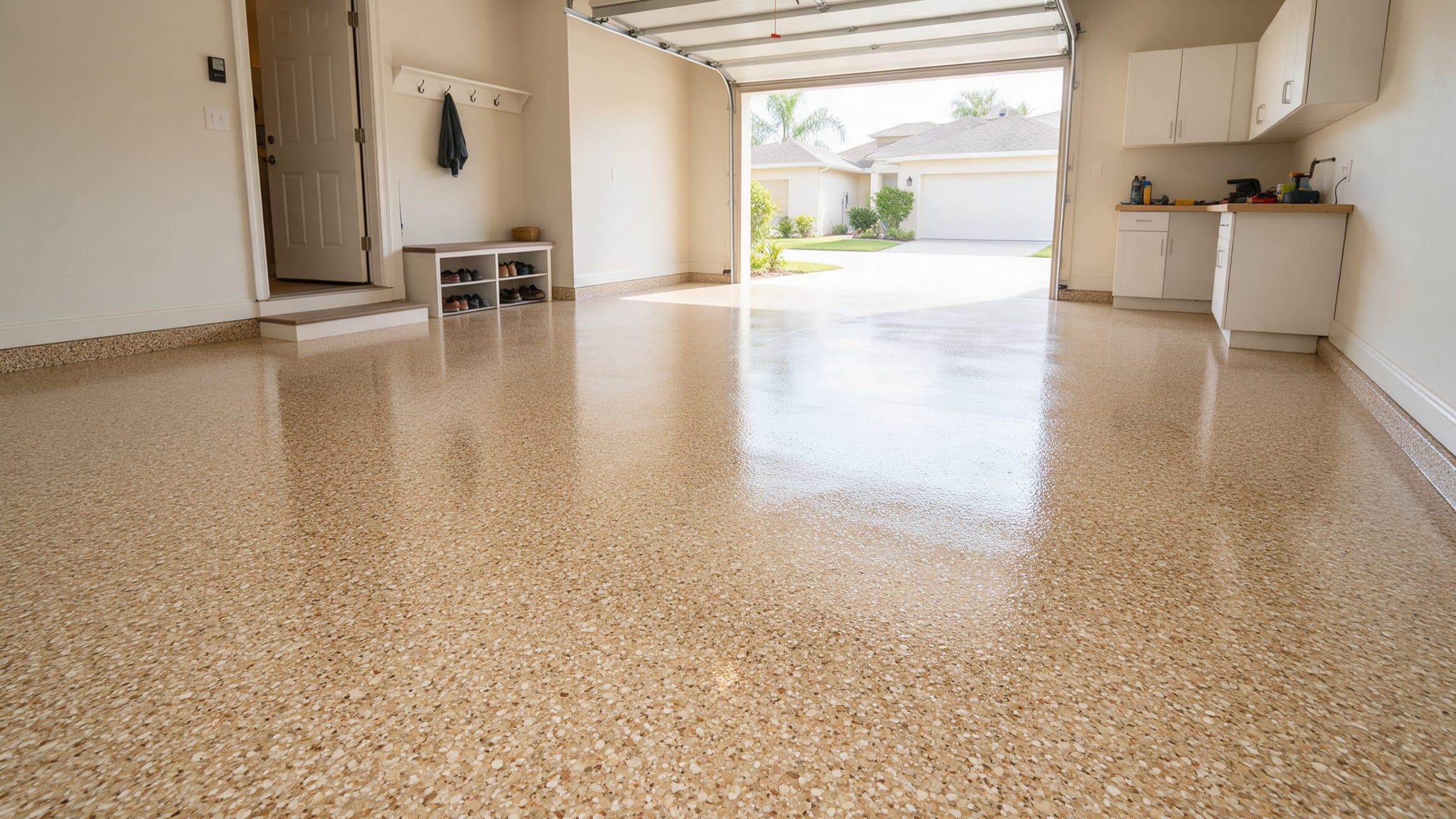
Most garages are lit for function, not for how the space actually looks — a single fixture or the garage door opener's bulb. Layered lighting (overhead ambient light plus task lighting over a workbench) changes both usability and how a finished floor, especially a metallic one, actually reads day to day.
Wall systems
Paint, slatwall, or a washable wall panel system gives the garage a consistent, finished look and, in the case of washable panels, holds up to the same daily wear the floor does. Wall color also interacts with floor color in the same way it does in any other room, worth deciding together rather than separately.
Workbenches and function zones
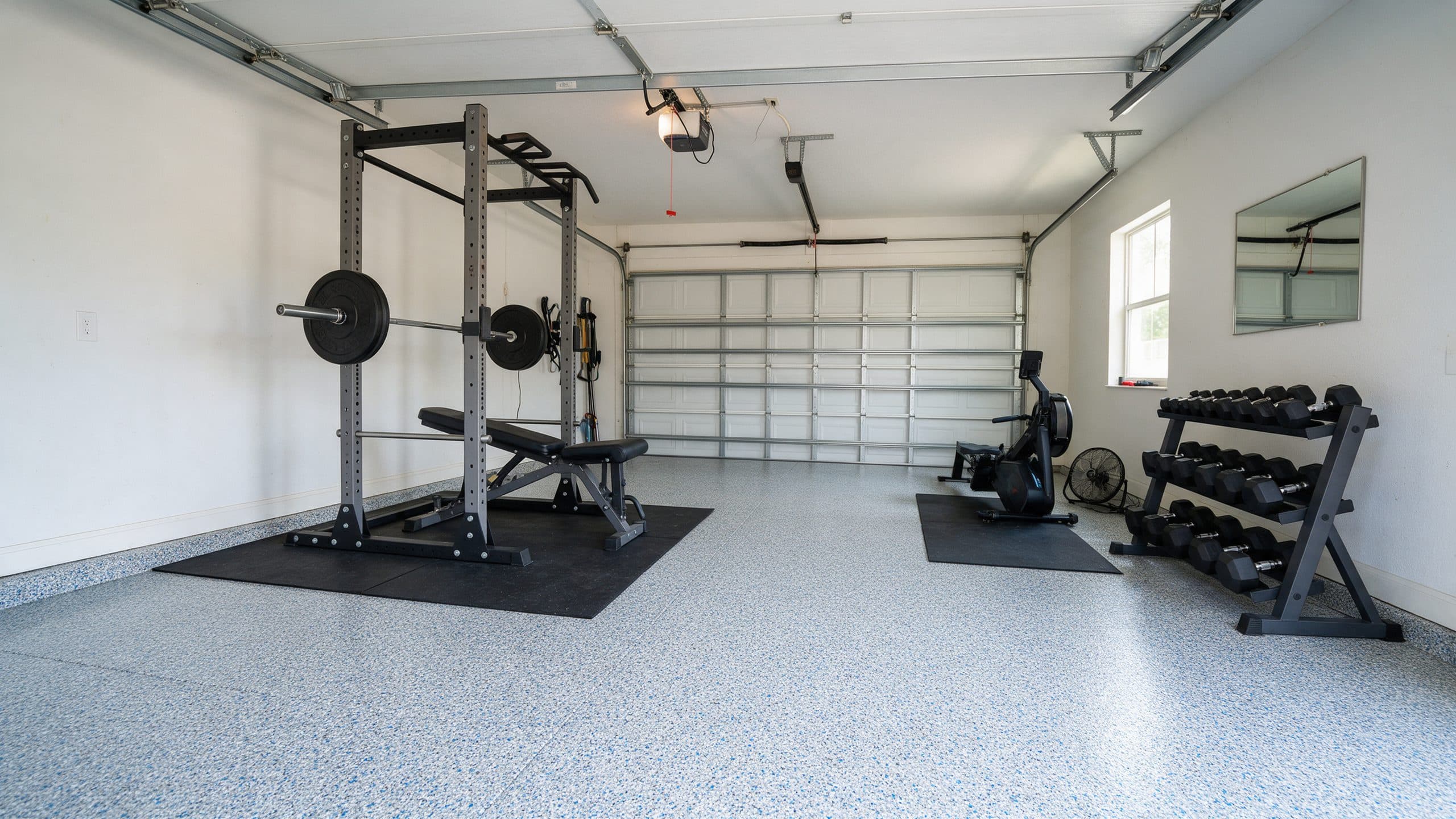
If the garage does more than park cars, workbench, hobby space, gym corner, it's worth zoning those areas early. A workbench with a durable, easy-to-clean surface next to a coated floor built for wheeled traffic and spills tends to hold up better than a workspace improvised after the fact.
Keeping the whole space cleanable
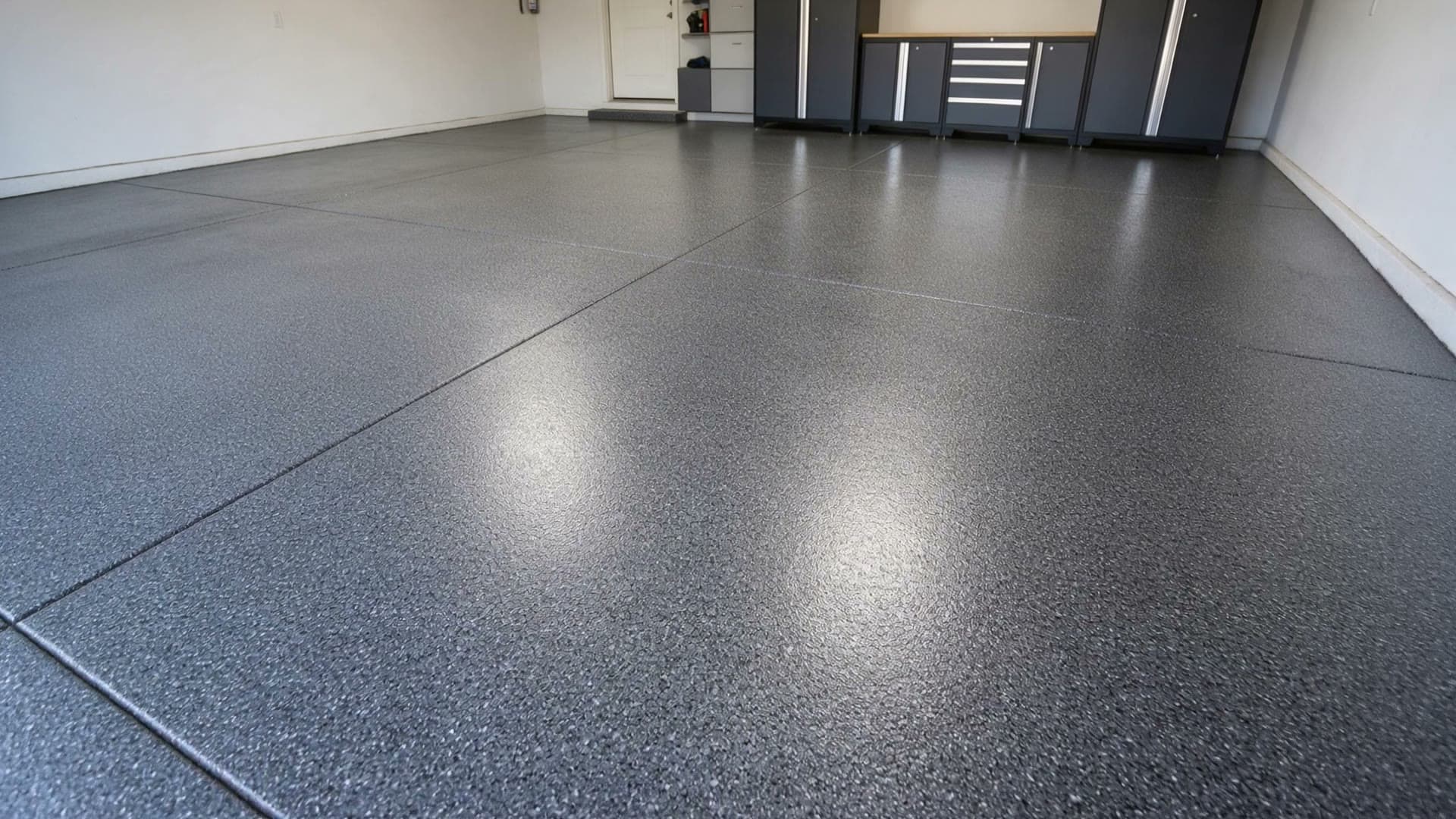
The point of most of these upgrades is a garage that's easier to keep clean, not just nicer to look at once. A sealed, coated floor, washable wall surfaces, and off-the-ground storage all reduce the number of surfaces that trap dust, oil, and debris, which matters more in a South Florida garage that sees pollen, humidity, and regular vehicle traffic year-round.
Sequencing the project
In general: address the slab and flooring first, since that involves the most disruption and dust, then wall systems, then cabinetry and storage that anchors to the floor or walls, then lighting and final organization. Getting the order right avoids redoing work or protecting finished surfaces from a later phase's mess.
 Surface concept